


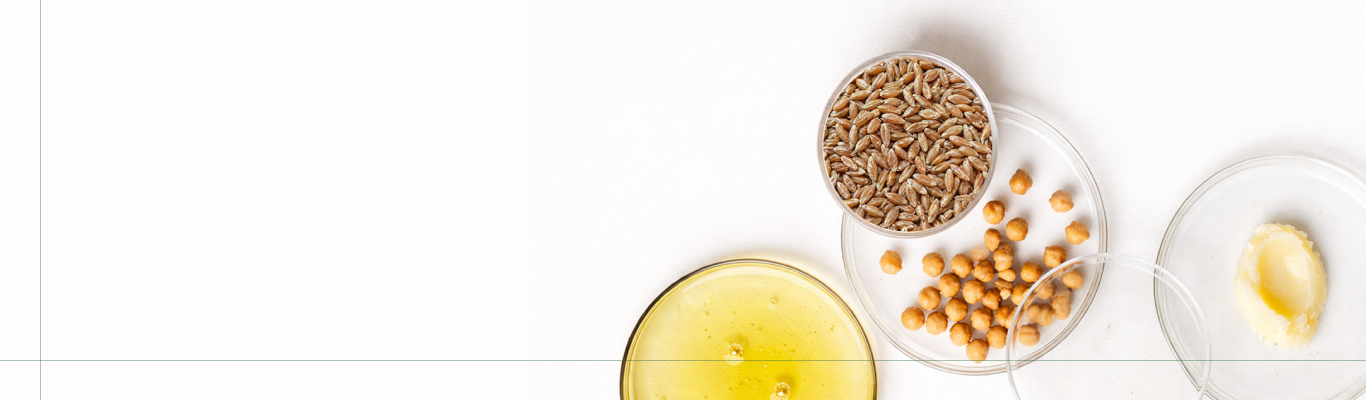

The Science of Staples
Staples make up almost 70% of our daily caloric intake in India¹. Our core metabolism runs on the roti, chaval, and daal we consume. While we’re getting smarter about what to eat, tracking protein grammage, and adding supplements, staples are grossly underexamined and overlooked.
Most staples in our houses are bought on habits passed down generations. It’s been a while since we questioned their quality or, for that matter, “What makes for a quality staple?”
In this period, food science is unrecognizable from what it was just a few decades back.
There are some dangerous trends around the density of nutrition, consumption of adulterants and contaminants. These can compound over a lifetime and do real damage. Low-quality staples may leave us calorie-sufficient but nutrient-deficient and at risk of disease.
To understand the science of staples, we must understand
the 4 shifts that have worsened in India’s food system:
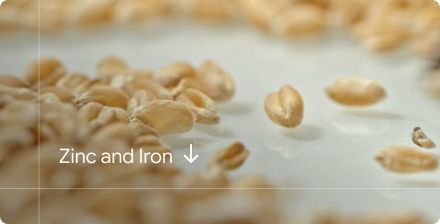
Mineral Density Drop
and 27% less iron than pre-Green Revolution varieties¹.
Same grain. Less nutrition.
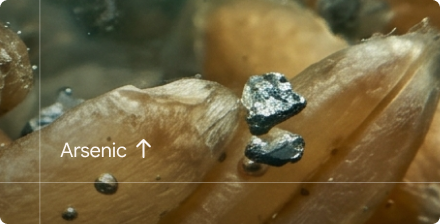
Rise of heavy-metal contamination
driven by groundwater and fertilisers². Long-term exposure is
linked to heart disease, type-2 diabetes, and certain cancers.
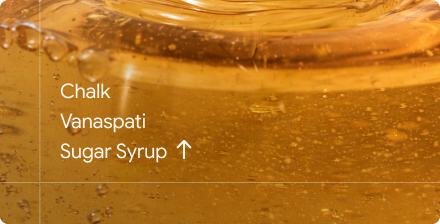
Widespread adulteration
additives never appear on the front label. Some flour chemicals
legal in India are even banned in the EU³.
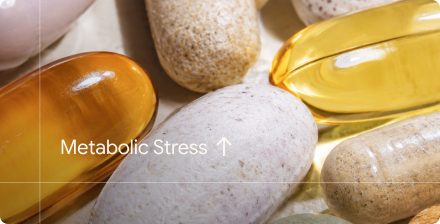
Supplements = high metabolic stress
less stress on your body than synthetic isolates⁴.
What makes a staple good?
The quality of any staple comes down to five things:
What to ask
Where did the raw material actually come from, and how was it grown or raised?
What it checks for
Region, soil, climate, farming method, organic certification.
Why it matters
The land a staple is grown on shapes its nutritional profile. The source farm matters as much as the test result.
What to ask
Is it really what the label says, or has something cheaper been mixed in?
What it checks for
Adulteration tests, pesticide residue panels, antibiotic residue panels.
Why it matters
Adulteration changes nothing that’s visible. Only the right lab test exposes whether the staple is genuine.
What to ask
Has the method been slow and low-heat, or has it taken shortcuts that create harmful by-products?
What it checks for
Processing-method markers — Diastase Activity in honey, Butyric Acid in ghee.
Why it matters
Slow processing preserves nutrition. Industrial shortcuts hollow staples out and leave traces behind.
What to ask
Is the staple actually delivering what it should - fresh, nutrient-rich, low on harmful indicators?
What it checks for
Protein, dietary fibre, glycemic index, FFA, HMF, peroxide value
Why it matters
Even pure, well-processed staples can underperform. Lab-measured numbers prove what's in your pack.
What to ask
Has the staple been tested by an independent, accredited lab - and can you see the report?
What it checks for
NABL-accredited third-party lab certification, full lab reports per batch.
Why it matters
Self-certification means nothing. A brand testing its own product is like grading its own paper.
What to look for
What it tells you
What to look for
What it tells you
What to look for
What it tells you
What to look for
What it tells you
F.A.R.M.S. - how we measure what matters
Every quality marker on our pack is a lab number, not an adjective.
Every pack has a QR code linking to the full third-party lab report - verification that is open and accessible.
Every batch maps back to a farm and harvest. Sourcing as a record, not a story.
Every adulterant, pesticide, and antibiotic residue is tested. Purity as a result, not a claim.
Stone milling, Bilona, cold extraction. Every processing decision backed by science.
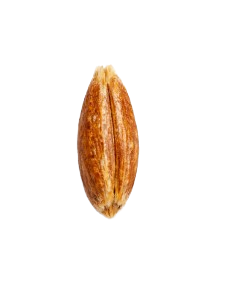
One of the oldest cultivated wheat species in the world, predating modern bread wheat. Grown on rain-fed land, predominantly in Maharashtra and Karnataka.
The shortcut today:
Most commercial atta in India is modern hybrid wheat (Triticum aestivum) - the semi-dwarf, high-yield varieties introduced during the Green Revolution from 1965 onwards. These have higher starch digestibility than traditional wheats, which translates to a higher glycemic load.
| Parameter | What it tells you | 10x Farms Khapli Atta |
|---|---|---|
| Glycemic Index | How fast a carb raises your blood sugar. Lower = slower release | 47 (Low. Modern wheat sits at 70+) |
| Protein | Nutritional density per 100g | 13.99g |
| Dietary Fibre | Gut health and satiety per 100g | 12.83g |
| Heavy Metal Screen | Whether the wheat carries environmental contaminants like lead, arsenic, or mercury | All BLQ (Below Limit of Quantification) |
| GMO Screen | Whether the wheat has been genetically modified | Non-GMO confirmed |


A Commitment to Food Science

Food science is an evolving field. New research, new scientific breakthroughs, and new methods of food processing and measurement advance year on year.
Our commitment is simple. At 10X FARMS, we are on top of food science, so you can stay on top of your and your family's health.
CITATIONS
¹ Welch, R.M. and Graham, R.D. Journal of Experimental Botany, 2004. Davis, D.R. et al. Journal of the American College of Nutrition, 2004 - declining mineral content in modern cereal crops.
² Bhattacharya, P. et al. Science of the Total Environment, 2007 - and follow-up studies on arsenic accumulation in Indian rice and wheat.
³ FSS (Food Products Standards) Regulations, 2011 - permitted flour treatment agents in India. Azodicarbonamide and benzoyl peroxide are prohibited under EU Regulation (EC) No 1333/2008.
⁴ FSSAI. Advisory on the term "100%" on food labels. File No. RCD-02001/133/2024, dated 28 May 2025.
5 Zaharieva, M. et al. "Cultivated emmer wheat (Triticum dicoccon Schrank), an old crop with promising future: a review." Genetic Resources and Crop Evolution, 2010 - establishes Khapli/emmer as one of the oldest domesticated wheat species.
6 Indian Council of Agricultural Research (ICAR). History of Wheat Improvement in India. Norman Borlaug's semi-dwarf wheat varieties were introduced to Indian cultivation through the Green Revolution beginning 1965–66.
7 FSSAI surveillance data on adulteration in pulse-based flours.
⁸ Singh, U. and Singh, B. "Tropical grain legumes as important human foods." Economic Botany, 1992 — establishes the protein composition of Bengal gram (Cicer arietinum).
⁹ Pal, S. et al. "Milk Intolerance, Beta-Casein and Lactose." Nutrients, 2015 — covers A1/A2 beta-casein composition across cattle breeds, including indigenous Indian breeds (Gir, Sahiwal, Tharparkar) producing predominantly A2.
¹⁰ Food Safety and Standards (Food Products Standards and Food Additives) Regulations, 2011 - Indian regulatory framework for ghee adulteration testing, including Reichert-Meissl, Polenske, Butyro-Refractometer, and Baudouin tests.
¹¹ Non-GMO Project Verified status confirmed by NSF International for both Apis India Limited Natural Bees Honey (Cert C-649119-2025) and Organic Honey (Cert C-649120-2025), valid through May 2026.
¹² Centre for Science and Environment (CSE), New Delhi. Investigation into honey adulteration in India, 2020.